
An Indigenous child is being hurt and you can help. Will you?

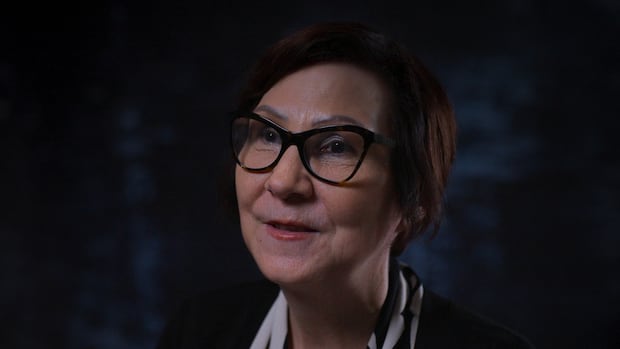
First Nations child advocate Cindy Blackstock appears in The Good Canadian, a point-of-view documentary chronicling the impact of racism and racist policies on Indigenous people in Canada. In the film, she outlines the consequences for child welfare when Canadians fail to press politicians to address the problem.
In 1907, a report found that 24 per cent of children forced to attend one of 15 residential schools had died from a preventable disease. The Canadian government chose not to implement basic public-health measures that could have saved many lives.
Saturday Night magazine urged the Canadian public to take up the issue to help stop the tragic deaths of Indigenous children. But although there was a brief public outcry, attention soon waned, and the deaths continued.
This lack of sustained public pressure allowed government inertia to persist — a phenomenon I call "screaming into silence."
The Truth and Reconciliation Commission of Canada (TRC) documented 4,037 deaths in residential schools, and this is likely an underestimate. Many deaths were not reported, and unmarked graves are still being found.
While the death of one child captures public attention, the deaths of thousands become mere statistics. To put it in perspective, the residential-school death toll is roughly equivalent to every child in 10 average-size Canadian elementary schools dying.
Delays and denial of essential services
More than a century later, First Nations children continue to suffer and die because the government has failed to implement advice based on evidence and comply with rulings by the Canadian Human Rights Tribunal (CHRT).
The federal Indian Department of the residential-school era is now Indigenous Services Canada (ISC). Today, First Nations children are still facing delays and being denied essential services.
Children have died waiting for services or medical interventions they're legally entitled to while bureaucrats from ISC fail to approve funding. This is not a theoretical problem — it's reality.
ISC has repeatedly flouted orders to comply with Jordan's Principle, which legally obliges Canada to provide First Nations children with the health, education and social support they need without delays. Since 2016, the CHRT has issued the government close to 30 orders, many of them for non-compliance.
Good, caring Canadians may feel powerless in the face of such injustice, but they shouldn't.
In the three weeks following the discovery of unmarked graves on the grounds of a former residential school in B.C. in 2021, the federal government implemented more of the TRC's Calls to Action than at any other time in the five-year period leading up to 2023, according to researchers Eva Jewell and Ian Mosby.
And it was the Canadians who wore orange on Canada Day that helped prompt politicians to act.
However, as public attention waned, First Nations children continued to suffer.

ISC racially discriminated against First Nations children
The documentary The Good Canadian, directed by Leena Minifie and David Paperny, is an account of the ongoing injustices against Indigenous people in Canada. It outlines the consequences of failing to press politicians to address systemic discrimination, and emphasizes the need for governments to tackle the root causes of problems rather than applying superficial solutions.
For instance, according to a 2019 study, First Nations children are 17.2 times more likely to be placed in foster care during an investigation than non-Indigenous children due to poverty, poor housing and caregiver mental-health issues linked to residential schools.
Systemic discrimination affects everyone. Public funding to ensure our kids are healthy, well-educated and free from poverty is one of the most important investments governments can make, yet Canada continues to underfund services for First Nations children.
According to CHRT rulings, ISC's failure to properly fund child-welfare services and ensure non-discriminatory access to health, education and social supports has cost tens of thousands of First Nations youth their childhoods and, in some cases, their lives.
A 2000 report on child welfare found that First Nations children received 22 per cent less funding per capita than the average. But the government chose not to address the underfunding at the time.
Instead, it fought First Nations children in a landmark human rights case, which resulted in a 2016 ruling by the CHRT that found ISC's practices to be discriminatory and ordered the department to stop.
However, ISC continued to take half measures — like limiting Jordan's Principle to First Nations children with "disabilities and those who present with a discrete short-term issue," when it was always supposed to apply to all First Nations children — and launched unsuccessful appeals.
In 2023, the CHRT approved a $23.34-billion payout to victims harmed by Canada's discriminatory conduct and practices, including the underfunding of the First Nations child-welfare system.
There are serious concerns about ISC's inability to end its discriminatory conduct and manage public funds equitably and in alignment with its children's rights obligations. But instead of reforming ISC and the Department of Justice, which work hand in hand, the government blames First Nations agencies and the First Nations children themselves.
What can a 'good Canadian' do?
Good Canadians can break this cycle by demanding action from the prime minister to follow CHRT orders, implement evidence-based changes to First Nations Child and Family Services, and reform ISC and the Department of Justice.
Orange Shirt Day is not just about caring and remembering — it's about taking action.
Watch The Good Canadian, then speak out. Don't let the headlines die until the suffering of First Nations children ends for good.
