
Formerly detained in China, Michael Kovrig asks Canadian leaders to be 'mindful' during trade mission
'Any increase in trade must come with stronger protections,' Kovrig says



Prime Minister Mark Carney is in China this week for what some have called a “reset” when it comes to relations between the two countries.
But Michael Kovrig, a geopolitical advisor and former diplomat who was detained by the Chinese government for 1,000 days starting in 2018, describes the mission as a return to “normal diplomacy, but not a normal relationship.”
“A reset would imply going back to the way things were a decade ago,” he told CBC’s Matt Galloway. “But that's not possible. Not just because of what happened to me, not just because of the failure of the 2017 trade agreement, but because so much has changed in the world.”
On day one of Carney’s visit to Beijing, the government agreed to co-operate with China more on clean and conventional energy, although an ongoing tariff dispute remains.
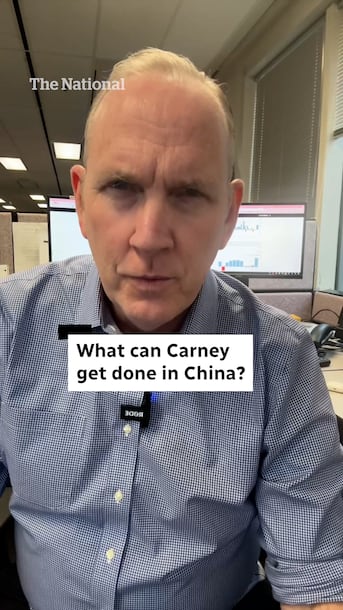
And while it’s easy to get excited about progress, Kovrig says he is hopeful officials won’t forget about the “darker side” of the Chinese state, balancing the desire to get a few quick deals signed while also keeping in mind how China’s government operates.
“We have to not have any illusions about the kind of regime, the kind of government and the kind of security apparatus that we're dealing with,” he said.
“The political hardliners, the security apparatus, the side of the state that I had far too much personal experience with — I think [Canadian leaders] need to be mindful of the dangers that poses.”
Kovrig spoke with CBC’s The Current on Thursday. Here is part of that conversation.
One of the issues that people have raised is the possibility that Canada could sacrifice some of our values because of the context that this meeting is happening in, and the economic urgency that this country faces. Do you worry about that?
Yes, I do. It's like that classic "keep calm and carry on" recommendation. Canada needs to keep calm and diversify. We're dealing with unprecedented geopolitical shocks for people in current generations, previous generations lived through World War I and World War II. This is that kind of decisive decade. And it requires much more geopolitical and strategic thinking to be able to deal with it. Much deeper awareness and understanding of China, but also of how to deal with resurgent great powers, with very radical ideas that are undermining the entire sense of international order. We have to readjust to that, but we have to do it in a strategic and systematic way, not in panic.
Strategic patience and strategic empathy are both crucial in dealing with senior Chinese leaders. Don't be in too much of a hurry to get benefits, because what they will deliberately do is create a slippery slope in which you make one small concession, like bringing back some MPs from Taiwan, which seems just like an inconsequential gesture.
You need a strategic and holistic framework rather than just looking at everything deal by deal, transactionally. One by one they may look fine, but the aggregate suddenly may radically shift the relationship and place Canada in a position where specific sectors, individuals, companies, organizations are suddenly subject to a dangerous level of Chinese Communist Party influence, and Canadian sovereignty and values and rights and freedoms and democracy can be undermined. That's the slippery slope that we have to be careful of.
What message do you think it sends to China and to Taiwan when two Liberal MPs cut short a trip to Taiwan because they were informed by advice from the Canadian government that they should get back here to avoid confusion with Canada's foreign policy?
I think that was an unfortunate decision and an unnecessary decision. The joint communique between Canada and China does not in any way preclude members of Parliament from visiting Taiwan as long as they're not officially representing the government. It makes you look disorganized and subservient.
This face to face meeting with Xi Jinping is loaded with any number of possibilities. You've talked about the need for guardrails. What should those guardrails look like?
Any increase in trade must come with stronger protections. Defences against espionage and IP theft have to continue ramping up, intelligence collection, protection from cyber espionage, better policing to end investigations to protect Canadian residents and citizens from transnational repression and ultimately trade and invest with multiple diverse partners to protect from weaponized economic interdependence.

The issue is whether specific sectors are so vulnerable that they can become pressure points that, in effect, force them to be lobbyists for the Chinese Communist Party. If the guardrails aren't stronger than the incentives, we're importing risk along with revenue.
What does China get out of this?
Canada should not underestimate the leverage that it potentially has. Among the things that the Chinese want is recognition by all G7 countries and all the important nations of the world, of their pre-eminence and importance. They are very status conscious. Mark Carney, as a statesman with gravitas and reputation in the world, by coming and visiting Xi Jinping, is giving him face. That's not something just to be given away, that has value.
Canada has a lot of substantive value from an economic standpoint. Canada has a lot of energy, commodities, resources and a lot of services that are of value to the Chinese market. There are a lot of Chinese businesses that would like to be able to do more business with Canada. It's in the interest of Chinese buyers and consumers to be able to have access to the Canadian market.
The problem is that the Chinese Communist Party also wants to condition all of that economic access. It wants to be a gatekeeper and dangle economic benefits in return for political concessions and muting Canada's voice on problematic behaviour that it engages in. And that has to be a red line.
ABOUT THE AUTHOR
With files from Ashley Burke. Story produced by Amanda Grant and Enza Uda. Q&A has been edited for length and clarity.