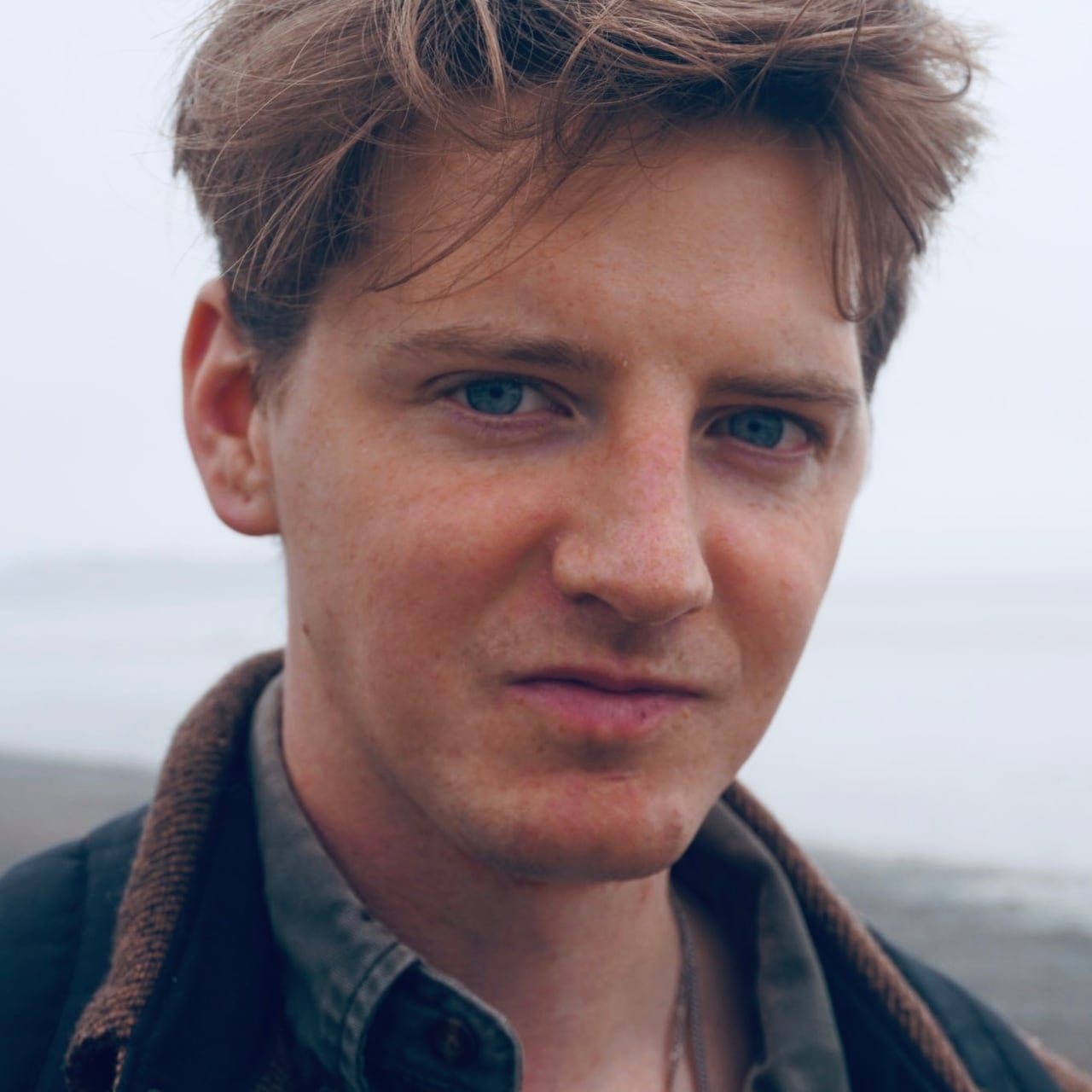
'Something just clicked' when Jordan Redekop-Jones wrote her first poem


Vancouver poet Jordan Redekop-Jones won the 2025 CBC Poetry Prize for her poem Mixed Girl as Cosmogonic Myth.
The CBC Poetry Prize comes with $6,000 from the Canada Council for the Arts and a two-week writing residency at Banff Centre for Arts and Creativity. Redekop-Jones's poem was also published on CBC Books.
The CBC Nonfiction Prize is currently open for submissions until March 1 at 4:59 p.m. ET. The prize recognizes works of original, unpublished nonfiction up to 2,500 words. Nonfiction includes memoir, biography, humour writing, essay (including personal essay), travel writing and feature articles.
Redekop-Jones is a mixed Indigenous/Anglo-Indian writer from Vancouver. In addition to the 2025 CBC Poetry Prize, she won the 2024 Austin Clarke Prize in Literary Excellence for Poetry and was a recipient of a 2024 Indigenous Voices Award in the unpublished poetry category.
She talked about her poem and what this recognition meant on Bookends with Mattea Roach.

Mattea Roach: Recently, you were announced as the winner of the CBC Poetry Prize. How did it feel to be announced as the winner of this prize?
Jordan Redekop-Jones: Honestly, it really is an indescribable feeling. I've dreamed of winning this prize over the last few years so, now that it's here, I honestly don't know how to feel.
I'm filled with so much gratitude to the readers and judges who took the time to read my work and, of course, selecting it as the winner. There were so many incredible longlisted and shortlisted pieces this year, but I'm just so honoured to be in such good company.
I've dreamed of winning this prize over the last few years, so now that it's here, I honestly don't know how to feel.- Jordan Redekop-Jones
What draws you to poetry as a genre to work in, as opposed to fiction or nonfiction?
Funnily enough, I actually started writing fiction before I did poetry. I started doing creative writing around the age of nine; I began with short stories.
I've always loved writing fiction, but I do remember getting very frustrated having to write the middle parts of stories. I just kind of always wanted to skip to the end and give my characters their 'happily ever after.'
In that way, poetry is kind of the best of both worlds for me. I still get to create these condensed stories while retaining a lot of the mystery behind my characters and the imagery I use throughout. I still love writing fiction. When I have more time to focus on it, I'll definitely be doing that, I've just been ultra-focused on finishing my debut full-length collection of poetry.
Was there a specific moment you can remember where you shifted into poetry?
Yeah, definitely. When I was nine, my class was asked to read a poem in front of our entire school. I was really, really shy at that point in time and I was selected as one of the people who got to read — and something just clicked. I'm not entirely sure what it is, but I started doing more public speaking. I started writing poetry in journals and have ever since.
Something just clicked.- Jordan Redekop-Jones
Can you tell us a bit about what Mixed Girl as Cosmogonic Myth deals with?
This piece centres on two characters, a mother and a daughter who are embarking on a journey of progressive illness and cultural reconnection in a liminal space. What I found so special in writing this piece is that, as the narrator, I was able to create a suspended space where my mother and I could exist as girls together.
There were no limitations of illness or disconnection created from years of being displaced and while we don't have an actual conversation in this piece, I wanted to combat the limitations aphasia has created in my mom's life by not speaking throughout. There are many types of non-verbal communication and I employ this by creating imagery for her, almost like painting a picture for her.
You mentioned the concept of liminal space as something that animates this poem both in the theme and the form, the way the lines break between stanzas. Can you tell me more about the role of liminal space in your work?
I've often been told that my work is kind of dreamlike and floaty and that has never been intentional but in this piece, specifically, was inspired by this liminal world I have created through cultural displacement and progressive illness.
The fractioned layout illustrates the divide and disconnection I often feel being multiracial and displaced as well as the heaviness of becoming a caregiver at a young age.- Jordan Redekop-Jones
I like to think that the fractioned layout illustrates the divide and disconnection I often feel being multiracial and displaced as well as the heaviness of becoming a caregiver at a young age. In a different light, I feel that the many components and stanzas of this piece come together in a structure that is really balanced.
Art has always been capable of creating those stable structures in my life and I feel that this piece is no exception to that.
Your poem largely deals with cultural reconnection. Where are you at now with respect to this?
It's been around five years now since I started reconnecting with my cultures and I feel like, honestly, I'll be reconnecting for the rest of my life. It's just one of those experiences where I'll continue to learn things day-by-day and there's just always new information popping up.
I feel so fortunate to have such incredible mentors and friends that have been so nonjudgmental and supportive during this entire process. Even when there are those tiny moments when I feel like giving up hope in finding all the answers that I am looking for, I feel like there's always something pulling me back in.
Interestingly enough, I actually started reconnecting when my mom got sick. There was just something that clicked for me. It was almost as if my ancestors were finally calling me back home and encouraging me to reconnect with my roots.
What is that background on your mom's side that you've been reconnecting with and what have you learned over that process?
On my mom's side, I am reconnecting to my Indigenous heritage. Growing up, there really were no conversations around it. I was very aware that I was Indigenous, I was aware that my mom was Indigenous, but I didn't ask any questions beyond that. I had very little information in the beginning.
I would just encourage people to ask questions when guided to and listen intently.- Jordan Redekop-Jones
The only thing I had to go off of was a birth certificate which had virtually no information on it. So, I've had to do a lot of work of speaking to different bands and trying to get as much information as I possibly can and luckily I made a friend who was able to connect me with a family member, so that's been really special.
What do you hope that readers will take away from this poem?
I hope that readers take away whatever resonates with them. My job as the writer is to create work that makes the reader feel something and create something that they connect to, so, I really hope that I've been achieving that.
That being said, I also hope that through my piece readers learn to lead with empathy. This notion can be applied to both being a caregiver to someone with progressive illness and to those who are going through cultural reconnection.
In terms of reconnection, I would say that you never know why someone is reconnecting or why they've waited a certain amount of time to do so, or what things they are uncovering during this reconnection.
I would just encourage people to ask questions when guided to and listen intently.
This conversation has been edited for length and clarity. It was produced by Daphné Santos-Vieira.
ABOUT THE AUTHOR